HVAC Repair in Downtown LA
AC and HVAC service in Downtown LA. C-20 technicians experienced with high-rise condos, Arts District lofts, package units, and urban heat island conditions.
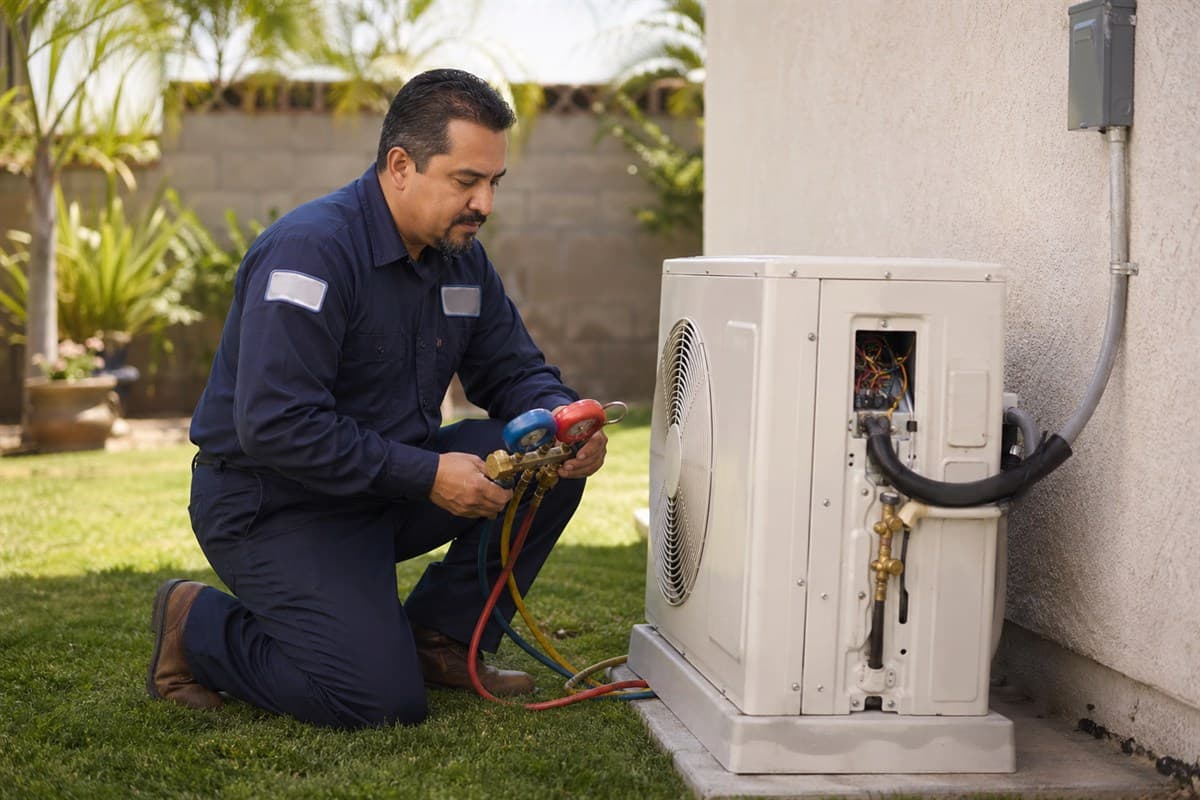
Downtown LA HVAC service is unlike anywhere else in the city. The buildings are tall, the systems are commercial-grade, the access requires coordination, and the climate inside the urban core runs measurably hotter than the surrounding neighborhoods. We dispatch DTLA work specifically to technicians experienced with high-rise and adaptive-reuse equipment.
What's Different About HVAC in Downtown LA
Urban heat island effect. The dense concentration of asphalt, concrete, and glass in DTLA's core absorbs and re-radiates heat throughout the day. Surface temperatures in the Financial District and South Park run 5–8°F warmer than residential LA on identical days, and overnight cooling is reduced. This creates HVAC demand patterns more like Phoenix than like Beverly Hills.
Building-type diversity. DTLA mixes everything: 50-story residential high-rises (The Emerson, The Grand, Metropolis, Ten50), pre-war commercial conversions (The Eastern Columbia, Pacific Electric Lofts), Arts District warehouse-to-loft conversions, mid-rise condominium buildings, and older Single Room Occupancy (SRO) buildings still in residential use.
Equipment complexity. Modern DTLA high-rises typically use one of three system architectures: central building chiller with fan-coil units in each unit, VRF (variable refrigerant flow) systems with multiple indoor heads per unit, or individual rooftop package units. Each system type has its own failure modes and service approach. A technician who only knows residential split systems will struggle with a fan-coil leak in a 30-story building.
Adaptive reuse buildings. Arts District loft conversions and pre-war commercial-to-residential buildings often have HVAC retrofits done at conversion time that compromise on either capacity or ductwork routing. Common in these buildings: undersized package units on rooftops trying to cool 14-foot-ceiling lofts, exposed-duct installations that look industrial but bypass returns entirely, mini-split installations in unit configurations that weren't designed for them.
DTLA Climate and Cooling Loads
Real DTLA summers run 5–8°F warmer than the LA average due to the urban heat island. South-facing units with floor-to-ceiling glass can see solar heat gains that overwhelm builder-spec AC during afternoon peak. North-facing and shaded units typically have no problem.
Winters are mild — most DTLA units run cooling 8+ months per year and only briefly need heat. Heat pumps make particular sense here.
Common Service Calls in Downtown LA
| Issue | Frequency in DTLA | |---|---| | Fan-coil unit leaks (high-rise central systems) | High — coil corrosion in older buildings | | Package unit failures (rooftop) | High — heat exposure shortens equipment life | | VRF indoor head problems | Moderate — modern luxury buildings | | Undersized AC in glass units | Common — builder-spec equipment | | Loft conversion AC inadequacy | Common — Arts District buildings | | HOA-approval delays on outdoor work | Routine — factor into timeline |
Building Coordination
For HOA-managed buildings, we coordinate with the property management company on access requirements. Documentation, certificates of insurance, and worker badges are provided when required by building management. Freight elevator scheduling, after-hours access, and quiet-hours restrictions are factored into the service visit.
For owner-occupied units in smaller buildings, work proceeds like any other residential service call — you let us in, we do the work, you sign off.
Service Coverage in DTLA
We cover the full Downtown core: South Park, Financial District, Historic Core, Bunker Hill, Civic Center, Little Tokyo, Arts District, Fashion District, and the Wholesale District. Adjacent areas served from the same dispatch zone: Chinatown, Echo Park, and Pico-Union.
Pricing for DTLA HVAC Service
| Service | DTLA Notes | |---|---| | Standard repair (in-unit work) | LA market pricing | | Building access / coordination fee | $50–$150 added to first visit | | Freight elevator scheduling | No additional fee for routine work | | After-hours building access | $100–$250 surcharge | | Fan-coil unit replacement | $1,500–$3,500 | | Package unit replacement | $5,500–$11,000 (residential-grade) | | VRF indoor head replacement | $1,200–$2,500 |
For commercial-grade equipment in larger residential buildings (40+ units), pricing is quoted on a project basis after on-site evaluation. Coordination with building engineering staff is standard.
Services Available in This Area
Frequently Asked Questions
Related Pages
Get a Free Estimate Today
Talk to a licensed C-20 technician — no pressure, honest answers.