Refrigerant Leak Repair Cost in Los Angeles
Updated April 28, 2026
How much does refrigerant leak repair cost in Los Angeles? R-22 vs R-410A pricing, plus honest repair-or-replace advice. C-20 licensed.
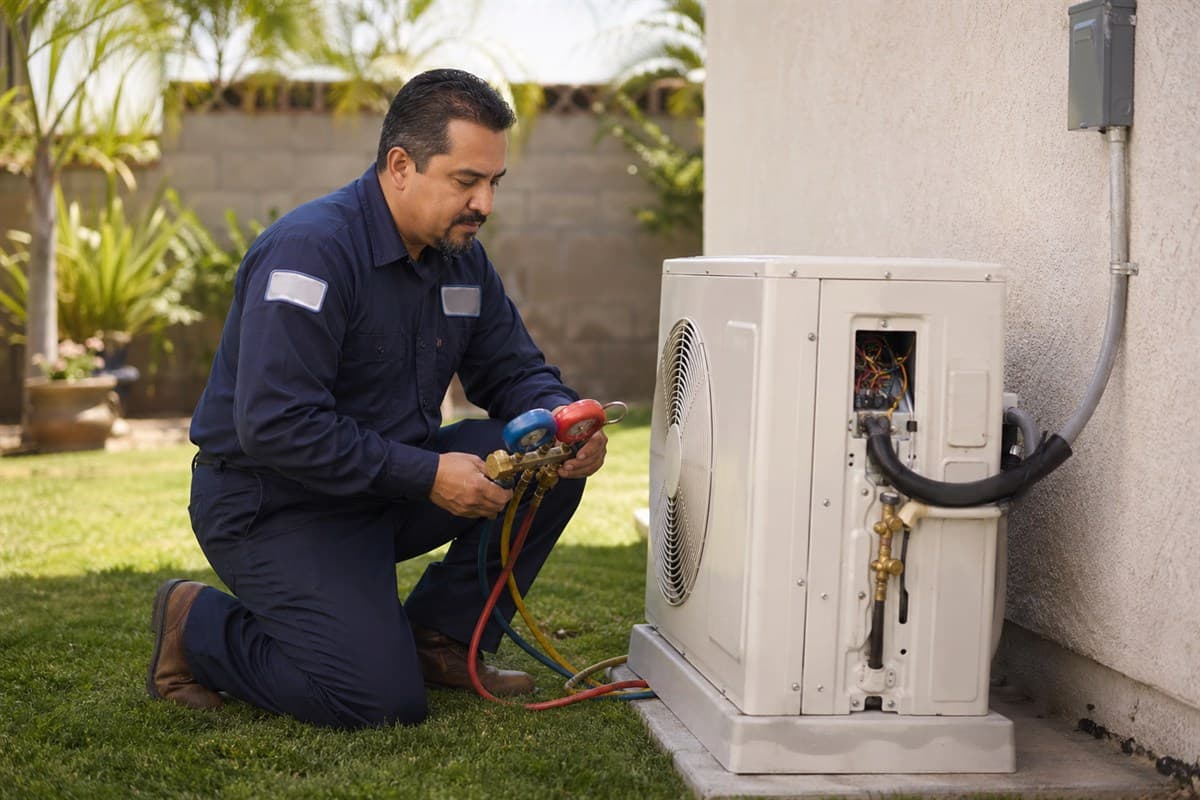
What Affects the Cost
- System age, brand, and refrigerant type
- Part availability and labor time required
- Accessibility of the unit (rooftop, attic, side yard)
- Whether additional repairs are needed
What's Included
- Full diagnosis with measurements
- Flat-rate quote before any work begins
- Labor warranty on completed repairs
- Manufacturer warranty pass-through on new parts
Red Flags: Quote Too High
Watch out for techs pushing full system replacement for a single failed component, or charging well above the LA market rate without a written breakdown.
Red Flags: Quote Too Low
Suspiciously cheap refrigerant top-offs without a leak search almost always come back within months. Used parts and uncertified techs are also common with very low quotes.
The AC is running. The outdoor unit is on. The house is not cooling the way it should. A technician checks the system and says the refrigerant is low.
In Los Angeles, refrigerant leak repair is one of the most misunderstood — and most frequently mishandled — AC services. The refrigerant leak repair cost los angeles homeowners face ranges from $400 for a minor accessible repair on a current-refrigerant system to $2,500 or more for an older R-22 system with a leak in the evaporator coil. The refrigerant type, the leak location, and whether the technician actually finds and fixes the source determine where you land in that range.
What Is a Refrigerant Leak — and Why It Matters in LA
Refrigerant is the substance that absorbs heat from inside your home and carries it to the outdoor unit to be rejected. If the system is low on refrigerant, it cannot transfer heat effectively — the result is an AC that runs constantly but barely cools.
Refrigerant does not get "used up." A system that is low has a leak. Topping it off without finding and fixing the source is a temporary fix. The refrigerant will continue to escape, and you will be calling again within one to two cooling seasons.
A Critical Note on Refrigerant Types in 2026
Los Angeles has a large stock of homes with AC systems running on different refrigerant types — and the regulatory landscape changed significantly as of 2025.
R-22 (Freon): Phased out of production under EPA regulations. No new equipment uses R-22. If your system was installed before 2010, it almost certainly uses R-22. Supply is limited and prices have increased substantially — currently $150–$250 per pound in Los Angeles and rising as existing stockpiles are depleted.
R-410A (Puron): Was the standard replacement refrigerant after R-22. As of January 1, 2025, R-410A is prohibited from production and import under the AIM Act due to its high global warming potential. R-410A remains available for servicing existing equipment from existing stockpiles, but supply will tighten and prices will rise over the coming years.
R-32 and R-454B (Puron Advance): These are the refrigerants used in new equipment manufactured for sale after 2025. If you are replacing a system, your new unit will use one of these. They are not interchangeable with R-22 or R-410A.
To find out which refrigerant your system uses, look at the data plate on the side of the outdoor unit. The refrigerant type is printed on the label.
Signs Your AC Has a Refrigerant Leak
- AC runs continuously but the house stays warm
- Ice forming on the refrigerant lines or on the indoor evaporator coil
- A hissing or bubbling sound near the indoor or outdoor unit
- Higher than usual electric bills despite reduced cooling
- Air from the vents feels slightly cool but never cold
In Los Angeles, low refrigerant is often misdiagnosed as an undersized unit during heat waves. If cooling was adequate last summer and is now struggling under the same conditions, suspect a refrigerant leak before assuming the system is too small.
Refrigerant Leak Repair Cost in Los Angeles — Full Breakdown
| Service | Low End | High End | |---|---|---| | Diagnostic and electronic leak detection | $100 | $250 | | R-410A refrigerant (per pound) | $60 | $120 | | R-22 refrigerant (per pound) | $150 | $250 | | Minor leak repair (accessible location) | $150 | $400 | | Major leak repair (evaporator coil area) | $800 | $1,800 | | Evaporator coil replacement (if needed) | $900 | $2,200 | | Total — R-410A minor leak | $400 | $950 | | Total — R-22 system (top-off + minor repair) | $600 | $1,800 | | Total — evaporator coil replacement | $1,200 | $2,500 |
R-22 vs R-410A — The Decision Los Angeles Homeowners Face
If your system uses R-22 and has a minor, accessible leak — and the system is otherwise in good condition and under 12 years old — repairing and recharging can still make financial sense. The refrigerant cost is high, but it is less than system replacement.
If your R-22 system has a major leak in the evaporator coil, the math changes significantly. A coil replacement plus current R-22 pricing can reach $1,500–$2,500 — and you will own a repaired system using a refrigerant that will only become harder and more expensive to source. A new system using current refrigerant starts around $7,000–$13,000 installed in Los Angeles, but it comes with a manufacturer warranty, modern efficiency ratings, and a refrigerant that will be available and stable in price.
Get both numbers in writing. Any technician worth calling will give you the repair cost and the replacement cost side by side, without pressure, and let you make the decision.
Topping Off vs Finding the Leak
Some companies add refrigerant and leave without locating the source. This costs less on the day of service — and significantly more over the following two to three years as you pay for repeated top-offs and the leak slowly grows.
A proper refrigerant repair includes electronic leak detection or UV dye injection, locating the source of the leak, repairing or replacing the component, pressure testing the repair, and recharging the system to manufacturer specifications. Ask specifically whether the technician performs leak detection or only top-offs before scheduling.
What to Expect When You Call
- Call and describe the symptoms — AC running but not cooling, ice on the refrigerant lines, or a hissing sound. Ask whether the company performs full leak detection or only refrigerant top-offs.
- The technician arrives, checks refrigerant pressure, confirms it is low, and identifies the refrigerant type from the outdoor unit data plate.
- A C-20 licensed technician performs leak detection before adding any refrigerant. You receive a flat-rate quote for the full repair.
- Leak repaired, system recharged to manufacturer specifications, and tested for correct temperature split across the evaporator coil — typically a 14–20°F difference between supply air and return air.
Frequently Asked Questions
Related Pages
Get an honest quote — call us
Flat-rate pricing, no surprise charges.