Spring AC Tune-Up Checklist for Los Angeles Homes
What a real spring AC tune-up should cover in a Los Angeles home. The full technical checklist plus what homeowners can do themselves before scheduling.
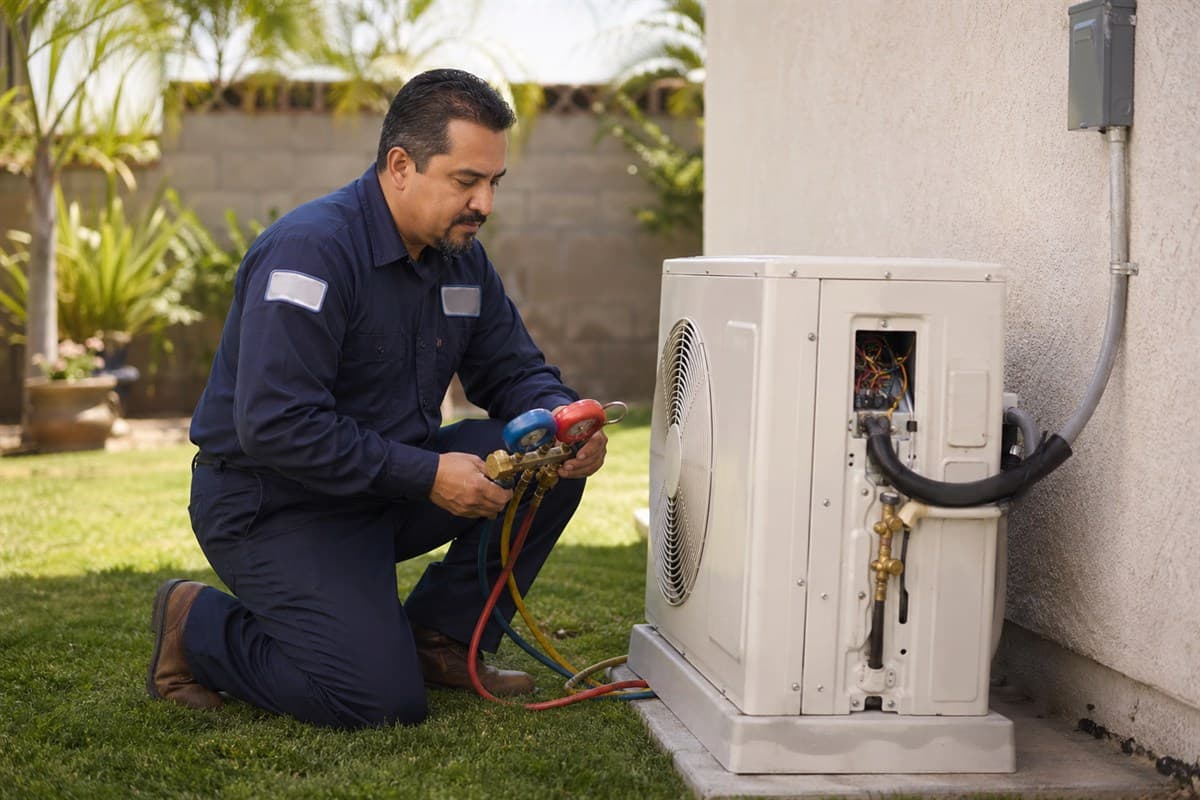
A spring AC tune-up matters more in Los Angeles than in most US cities — and the reasons are specific. The cooling season here runs six to seven months, from late April through October. Valley communities regularly see heat events above 100°F, sometimes stretching for a week or more. The housing stock includes a large share of systems installed 10–20 years ago, many of which have never received consistent annual maintenance. The cost of a mid-summer breakdown — emergency dispatch, expedited part sourcing, technician overtime — is routinely two to three times what a spring tune-up would have prevented. This checklist covers what a thorough residential tune-up should actually include.
What a Real AC Tune-Up Covers in Los Angeles
A legitimate tune-up is not a 20-minute visual pass. Here is the complete 12-point inspection a qualified technician should perform on a Los Angeles system:
-
Air filter inspection and replacement — LA dust and smog load filters faster than most US cities. A clogged filter restricts airflow, which strains the blower, drops the temperature split, and can cause the evaporator coil to freeze over. Filters in many LA homes need replacement every 30–45 days during the cooling season, not every 90.
-
Thermostat calibration check — The thermostat should display a temperature within 1°F of the actual room temperature. A miscalibrated thermostat causes the system to short-cycle or run past setpoint, both of which increase wear and energy cost.
-
Electrical connections tightened — Vibration from compressor cycling loosens terminal connections over the course of a cooling season. Loose connections cause resistance heating, intermittent faults, and eventual component failure. Tightening takes minutes; the failure it prevents can cost hundreds.
-
Capacitor test (start and run) — Capacitors are the most common electrical failure in LA summer heat. A technician measures microfarad output against the rated value on the label. A capacitor reading more than 6% below rated capacity is near the end of its reliable life. Caught during a tune-up, it is a straightforward repair. Found during a July no-cooling call, it means a same-day emergency dispatch charge on top of the part cost.
-
Contactor inspection — The contactor is the high-voltage switch that energizes the compressor and condenser fan. Repeated arcing pits the contact surfaces, which causes resistance heating and compressor short-cycling. A pitted contactor costs $100–$200 to replace; the compressor damage it can cause costs $1,200–$2,500.
-
Refrigerant pressure check — The technician measures both high-side and low-side pressure against manufacturer specifications for the outdoor temperature at the time of the test. An off-spec reading indicates a slow leak — the kind that reduces cooling capacity gradually and goes unnoticed until the system cannot hold setpoint on a 95°F afternoon.
-
Condenser coil cleaning — Los Angeles smog, dust, and cottonwood deposits build up on the outdoor coil's aluminum fins. Even a partial layer of contamination reduces the coil's ability to reject heat, raising head pressure and compressor operating temperature. Studies consistently show that a dirty condenser coil cuts efficiency 20–30% and accelerates compressor wear. In LA, annual cleaning is maintenance — not optional.
-
Evaporator coil inspection — The indoor coil runs in a dark, humid environment that supports mold and algae growth. The technician checks for ice bridging (indicating restricted airflow or low refrigerant), micro-leaks at the coil connections, and biological buildup that degrades indoor air quality.
-
Condensate drain test — The drain line carries condensate from the indoor coil to a floor drain or exterior. Algae and debris clog these lines, triggering the float switch that shuts the system off to prevent water damage. A clogged drain on a hot July afternoon is an unnecessary service call. Testing and clearing during the tune-up prevents it.
-
Blower wheel and motor inspection — A dirty blower wheel loses balance and efficiency. The motor draws more current, temperatures rise, and the bearings wear faster. A technician measures motor amp draw against rating and inspects the wheel for buildup. Reduced airflow from a dirty blower is often mistaken for a refrigerant problem.
-
Duct inspection (visible sections) — In older Los Angeles homes, flex duct in attics disconnects from boots and collars over time, from thermal cycling, rodent activity, and original installation shortcuts. A technician inspects all accessible duct sections and reports any disconnections or significant leaks. Leaking duct in an unconditioned attic is one of the biggest efficiency losses in an LA system.
-
Full system operation test with temperature split measurement — The technician measures the temperature of the air entering the return and leaving the supply. In a properly functioning system, this split should be 16–22°F. A split below 14°F confirms a problem — low refrigerant, restricted airflow, or both. This measurement is the final confirmation that the system is actually cooling, not just running.
What Homeowners Can Do Before the Tech Arrives
These four steps cost nothing, take 10 minutes, and make the tune-up more productive:
-
Replace or check the air filter — If it is gray and clogged, swap it out before the technician arrives. If you just replaced it, tell them — it removes one variable from the diagnostic and saves time.
-
Clear the area around the outdoor unit — Two feet of clearance on all sides is the minimum. Remove leaves and debris from the top of the unit. Trim back any plants that have grown against the cabinet over the winter. Restricted airflow around the condenser is a common cause of high-head pressure shutdowns.
-
Note any symptoms — When did cooling feel weaker than usual? Are there specific rooms that don't cool? Does the system struggle only in the afternoon heat or all day? Any unusual sounds — clicking, humming, rattling? This information helps the technician prioritize the diagnostic sequence.
-
Check the circuit breaker panel — If the system isn't responding at all, check whether the breaker has tripped. A tripped breaker is worth resetting once before calling. If it trips again immediately, leave it off and call — something is drawing excess current.
Signs Your System Needs More Than a Tune-Up
A tune-up is maintenance, not repair. If your system shows any of the following, you likely need a diagnostic service call rather than or in addition to the tune-up:
- Cooling capacity has dropped noticeably compared to last summer — the system runs but the house doesn't reach setpoint
- The outdoor unit runs but indoor temperature won't drop below 80°F on a 90°F day — a common sign of low refrigerant or a refrigerant leak (AC won't cool below 80°F)
- Grinding, humming, or clicking from the outdoor unit when it cycles on or off
- Short-cycling — the system turns on, runs for 2–3 minutes, shuts off, and repeats — which can indicate a refrigerant overcharge, a failing compressor, or an electrical issue
- Ice on the refrigerant lines or the indoor coil, which indicates either severely restricted airflow or low refrigerant charge (refrigerant leak repair cost)
These are not tune-up findings — they require diagnosis and repair.
Tune-Up Pricing in Los Angeles
A standard residential AC tune-up runs $89–$175 depending on system type, accessibility, and whether the indoor and outdoor units require separate access. Two-system homes run $149–$299.
What the price includes: all 12 inspection points above, a written condition report documenting every measurement taken, and a flat-rate quote for any repair identified. What it does not include: refrigerant recharge, replacement parts, or repairs — those are quoted separately and require your approval before any work begins. There are no add-ons billed after the fact.
A spring tune-up is the lowest-cost intervention in residential HVAC. The alternative — a July emergency call with a failed capacitor or a system that hasn't cooled properly in three weeks — costs significantly more in both dollars and discomfort.
Book the AC tune-up service before the first heat event of the year.
Frequently Asked Questions
Related Pages
Get a Free Estimate Today
Talk to a licensed C-20 technician — no pressure, honest answers.